Pack rats in the desert
Pack rats, or white-throated wood rats, are native desert rodents about the size of a small rat, with a hairy tail and large ears.
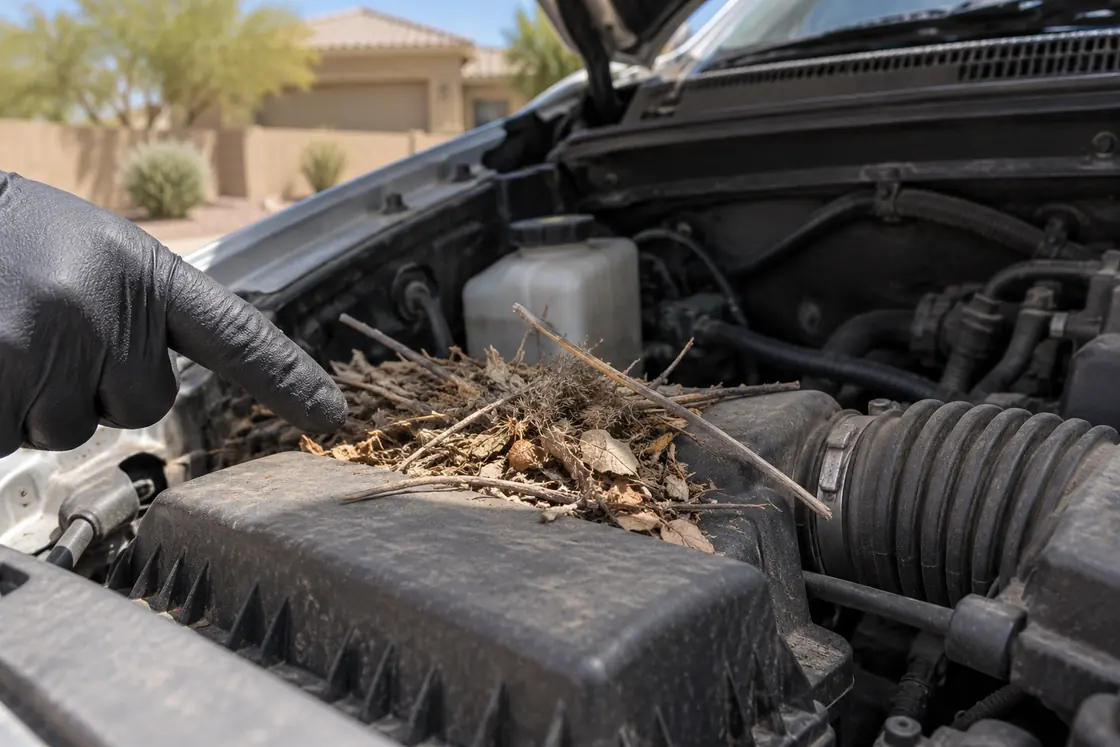
Each one builds a midden, a big pile of sticks, cactus pieces, debris and collected objects, under prickly pear and cholla, in brush, woodpiles, under sheds, decks and stored materials, and sometimes in garages, attics or the engine bay of a vehicle.
Pack rats are a major problem for cars, trucks and RVs in Casa Grande. They chew wiring, hoses and insulation and pack nesting material around engines, which can cause expensive damage and even fires.
Signs of pack rats
- A large pile of sticks, cactus pieces and debris in the yard, under a shed or near a wall
- Nesting material, cactus pieces or chewed debris in an engine bay
- Chewed wiring, hoses or insulation in vehicles
- Droppings and urine stains in the garage, under the hood or in storage
- Missing small objects, like keys or shiny items
Roof rats and mice
Roof rats have spread through parts of central Arizona. They climb citrus and palm trees and get into attics through gaps at the roofline, roof vents and where the roof meets a wall.
House mice come into garages and kitchens, especially in the cooler months. Droppings, chewing and scurrying at night are the signs.
In Casa Grande, rodents near The Promenade area are traced from the ridge vent, not from a product chosen before anyone looks.
Inspection
The technician checks the yard for middens, the garage, sheds and storage, vehicles parked outside, the attic and the roofline. They note gaps rodents can use and conditions attracting them.
Trapping
Traps are set near middens, in garages and along travel routes. Pack rats can be trapped and removed. Roof rats and mice are trapped where they travel, often in the attic and garage.
Removing middens
Once rats are trapped, middens are removed so new pack rats do not move in. Middens can contain droppings and urine, so they are removed with protective gear.
Sealing
Gaps are sealed with materials rodents cannot chew: hardware cloth, metal flashing, steel mesh and sealant. Garage door seals, door sweeps and roof vent screens are common fixes.
Exterior stations
Where appropriate, locked tamper-resistant bait stations can go along walls and fence lines, secured so children, pets and wildlife cannot get to the bait.
Follow-up
Return visits check traps, look for new activity and confirm the middens are not being rebuilt.
Protecting cars, trucks and RVs
- Park away from prickly pear, brush and woodpiles where possible
- Keep the garage door sealed and closed
- Open the hood and check the engine bay regularly, especially for vehicles that sit
- Remove debris and stored materials near where you park
- Have nearby middens trapped and removed
A Casa Grande home with rodents at the utility chase needs that spot named when you call, so the visit starts in the right place.
We do not scatter loose poison around your yard or garage. We do not leave middens in place for new rats to move into.
And we do not call the job done without a follow-up.
Kissing bugs and other midden pests
Pack rat middens are home to more than pack rats.
Conenose bugs, often called kissing bugs, live in middens and can wander into homes at night, especially in late spring and early summer, and their bites can cause reactions in some people.
If you have seen rodents near downtown Casa Grande, leave the gable vent as you found it and photograph it.
RVs, trailers and winter visitors
Casa Grande and the communities around it have many RVs, travel trailers and seasonal homes that sit empty for months. Those are prime pack rat and mouse targets.
Before closing up for the summer, seal the vehicle and storage area, remove food, and have nearby nests dealt with; when you return in fall, check the engine bay and wiring before driving.
Hantavirus and cleanup
Rodent droppings and nesting can carry hantavirus and other diseases. Do not sweep or vacuum dry droppings.
Spray with disinfectant, let it soak, and wipe up with gloves. Large middens and heavy contamination are best removed by a professional.
What to look for near Coolidge
Call when you find a midden, chewed wiring or droppings. Call now.
Rodent quick facts for Casa Grande
- White-throated woodrat (*Neotoma albigula*): the desert pack rat. It builds large nests of sticks, cactus pieces and debris under shrubs, sheds and parked vehicles.
- Roof rat (*Rattus rattus*): a climber that lives in citrus trees, palms and attics, spreading through older Arizona neighborhoods.
- House mouse (*Mus musculus*): small, enters garages and homes through gaps around pipes, doors and weep holes.
- Signs: chewed engine wiring, nests in air filters, droppings in garages and stored items, and debris piles under vehicles or sheds.
- Health: deer mice and some other wild rodents in Arizona can carry hantavirus, so nests and droppings are wetted with disinfectant first and never swept dry.