Why Casa Grande sees so many bee calls
Casa Grande sits in farm country. Cotton, alfalfa and other crops, irrigation canals, citrus and backyard gardens feed bees through most of the year, and colonies grow quickly in the long warm season.
Swarms are most common in spring and again in fall. Most wild colonies in central Arizona are Africanized honey bees.
They look like any other honey bee but defend their nest in far greater numbers, react to noise and vibration from farther away and chase people a long distance.
Places colonies move in around Casa Grande
- Under the skirting of manufactured homes and park models in the resort and mobile home communities
- Sheds, workshops, barns and stacked materials on larger lots
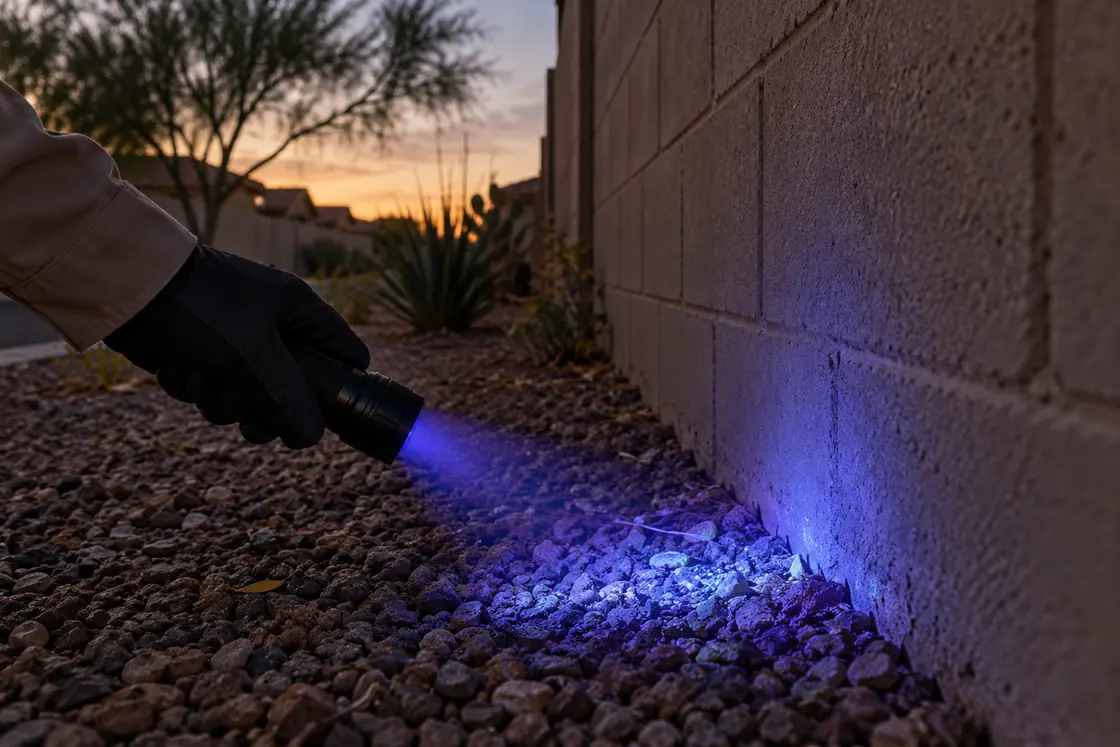
- Hollow block walls and garden walls
- Water meter boxes, irrigation valve boxes and pump housings
- Eaves, attic vents and gaps in stucco on site-built homes
- Old vehicles, farm equipment, grills and empty containers
A swarm or a colony
Swarm
A swarm is a cluster of bees hanging on a branch, a fence or a wall.
It is a colony on the move and often leaves within a day or two. Keep away from it and do not spray it.
Colony
A colony has settled into a cavity and is building comb.
Bees fly in and out of the same opening all day, every day, and the traffic grows over the weeks. It will not leave by itself.
What to look for near downtown Casa Grande
The technician confirms where the colony is and how big it has become. In a box, a shed or a tree, it is removed directly.
Under skirting, the panel is opened and the comb taken off the underside of the home.
Inside a block wall or a roof, the wall or ceiling is opened at the comb and patched afterward.
Bees around the Florence Boulevard corridor follow the way the house is built, and the door threshold is one of the first places checked.
After removal, the opening is closed so bees cannot use it again.
What to look for near Coolidge
Some colonies can be taken alive by a beekeeper. Colonies that are very defensive, very large or close to people, pets, livestock or a busy area are treated.
You hear which applies to yours and why before work starts.
Livestock, pets and outdoor work
On lots with horses, dogs, chickens or other animals, a defensive colony is a real hazard, because animals that are tied or penned cannot get away.
Keep animals well away from a known colony until it is dealt with. Hold off on mowing, tractor work, trimming and running pumps nearby, since vibration and engine noise set Africanized bees off.
The time of year in Casa Grande changes the pressure, and bees near Eloy are still confirmed at the foundation crack.
Keep children and pets inside or far from the opening. Do not plug the hole, which can push bees into the home, and do not spray a store-bought product into it.
If bees chase you, run to a building or a car and do not stop to swat. If anyone is stung many times or has trouble breathing, call 911.
After the colony is gone
Homes around Eloy get the bees inspection at the bath trap first, because that is where the activity usually starts.
Homes around The Promenade area get the bees inspection at the bath trap first, because that is where the activity usually starts.
Keeping new colonies out
In spring and fall, walk around the home and outbuildings.
Check that skirting panels are tight, meter and valve box lids are in place, weep holes and vents are screened, and gaps around pipes and wires are sealed.
Get rid of empty containers and stacked materials that could shelter a swarm.
Bees signs in Casa Grande
For bees in Casa Grande, the visit starts at the pet door and then follows whatever that shows.
A young colony has less comb and is quicker to remove. Call now and say where the bees are going in.
Bee quick facts for Casa Grande
- Africanized honey bees: honey bees with Africanized genetics are common in southern Arizona. They look like other honey bees but defend their colony in larger numbers and chase farther.
- Swarms: a resting cluster of bees on a branch or wall, mostly in spring. A swarm is looking for a new home and often moves on within a day or two.
- Colonies: bees that have moved into a wall, roof, water meter box, irrigation box, shed or the space under a manufactured home and started building comb.
- Comb: left in a wall after the bees are gone, comb and honey melt, draw other insects and can stain drywall, so it is removed when possible.
- Safety: stay at least 100 feet away from an active colony, keep pets and children inside and do not spray or plug the entrance.